English Statement
At Tibshelf Infant and Nursery School we recognise that achievement in later life heavily depends on children becoming ‘Lifelong Learners.’ At our school we recognise the importance of English and believe communication is essential for longer-term academic achievement.
We aim to deliver a high quality English curriculum that gives all our children the best possible chance of becoming confident and literate members of society. Tibshelf Infant and Nursery School recognise that poor vocabulary at age 5 impacts on a child’s education and longer term academic achievements. We strive to ensure all children can communicate clearly in spoken and written form. Our curriculum is supported heavily by high quality texts to promote our love of reading throughout our school.
Intent – what we do and why
At Tibshelf Infant and Nursery School, we want our children to leave the Infant phase of their education being able to;
- read easily, fluently and with a good understanding in line with end of Key Stage 1 expectations
- develop a habit of reading often, for both information and pleasure
- develop a wide range of vocabulary
- use spoken language to learn; to discuss and explain clearly their understanding and ideas
- develop confidence and enjoyment in all areas of English
- compose sentences orally and then write them down
- spell correctly the common exception words
- make phonetically plausible attempts at unknown words
- form individual letters correctly.
Implementation – whom how and why
The teaching and implementation of the English Curriculum at Tibshelf Infant and Nursery School is based on the Early Years Foundation Stage Curriculum and the National Curriculum for Key Stage One children. To achieve this, the focus of teaching in on each key strand for the different curriculums.
For EYFS children, English is delivered through the Prime areas of learning; listening and attention, understanding and speaking, as well as the Specific areas of learning; comprehension, word reading and writing.
In Key Stage 1, children are taught through four key strands as follows;
- Speaking and Listening
- Reading (including phonics and comprehension)
- Writing (including spelling and grammar)
- Handwriting.
Each strand is taught discreetly, with opportunities to revise and apply in context. Skills are built upon through a child’s journey with us from Nursery to Year 2 with clear progression identified through out curriculum.
In EYFS, English is taught for a minimum of one hour a day made up of smaller sections to include phonics, reading groups, handwriting and story time. Children also experience long extended periods of continuous provision where high quality interactions support all areas of learning as well as children have access to high quality reading and writing resources and areas.
In Key Stage 1, English is taught for a minimum of one hour per day focusing on different strands such as phonics, handwriting, Literacy Tree sessions and reading groups.
Further details of how we implement each strand can be found separately using the links below.
****See links/pics to reading, handwriting, writing, speaking and listening** on the website
Impact – how do we know if we have done well?
At Tibshelf Infant and Nursery children will be able to articulate their thoughts, feelings, opinions and information, to a range of audiences, for a range of purposes. They will have developed a love for books and will want to access books to answer their questions about the world around them. Children will have experienced and understand the importance of why being able to communicate effectively and be a good reader matters for their future life. Our children will know and understand and know that being able to read helps them to become lifelong learners in all other areas of the curriculum. Children will have developed the decoding and comprehension skills; equipping them with skills required to be a good reader ready for the Key Stage Two curriculum at Townend Junior School.
At Tibshelf Infant and Nursery School children of all abilities will have been exposed to a wide range and vocabulary rich environment which they will be able to apply in their writing. Children will be able to write down their ideas fluently on paper with accurate word and spelling structures. These ideas will be presented proudly and clearly.
Our robust assessment system will show more children are achieving;
- ELG in Communication and Language strands – Listening and Attention, Understanding and Speaking in line with national expectations.
- ELG in Comprehension, Word Reading and Writing in line with national expectations.
- the expected standard (nationally) in the Y1 Phonics Screening Check.
- the expected (nationally) end of Key Stage One assessments.
Children will then go on to be successful and ‘lifelong learners’ during the next stage of their education at Key Stage Two.

Reading Intent (including Phonics and comprehension)
At Tibshelf Infant and Nursery School, we believe that all our children can become fluent readers and writers. We value reading as a crucial life skill. By the time children leave us, our intent is for children to be able to;
- read easily, fluently and with a good understanding in line with end of Key Stage 1 expectations
- develop a habit of reading often, for both information and pleasure
- develop a wide range of vocabulary
At Tibshelf Infant and Nursery School, we understand that reading begins with a language rich environment where adults are involved in high quality interactions to support vocabulary development. We want to engage with children in conversations which will help them to understand what they read.
Implementation – what and how?
At Tibshelf Infant and Nursery School, we believe that a child’s reading journey starts long before formal phonics lessons are introduced. We value the importance nursery rhymes, songs and music play in tuning children into the sounds around them. Our carefully developed Long Term Plans in our Early Years Foundation Stage incorporate a range of nursery rhymes and songs. Each classroom is furnished with an inviting ‘Reading Area’ stocked with high quality texts linked to specific English teaching and all other curriculum areas.
**see photos of Reading Areas across school**
Our school has a central library which is accessible to all children with a range of books to support reading for pleasure and learning.
**photo of school library**
Nursery
Our nursery children learn a repertoire of nursery rhymes and songs. They take part in Nursery Rhyme Week during November. Throughout the year children experience a ‘pre-phonics’ programme to ensure they are ready to access the more formal phonics programme in Reception. These activities remain playful but carefully incorporate carefully planned intended learning opportunities to ensure children have the knowledge and skills to give them the best possible start to reading.
Reception and Year 1
Formal phonics lessons begin within the first three weeks of Reception children starting school. We teach phonics through Little Wandle Letters and Sounds Revised, which is a systematic and synthetic phonics programme. The carefully designed programme supports children to build growing knowledge of the alphabetic code. Phonic lessons take place daily, starting with about 15min lesson initially but building up to a full 30min lesson as quickly as possible. The lessons are supplemented with additional phonics and reading based activities as part of our core offer within the learning environment.
**photograph of some phonics/reading based activity**
Whilst children are learning to recognise individual letter sounds, they are also learning to consolidate their ability to hear the oral blend. They do this through playing lots of talking games. Once children have enough individual letter sounds they begin their reading journey through blending sounds to make words.
We teach children to read through reading practice sessions three times a week. Each reading practice session has a clear focus so that the demands of the session do not overload the children’s working memory. The reading practice sessions have been designed to focus on three key reading skills:
- decoding
- prosody: teaching children to read with understanding and expression
- comprehension: teaching children to understand the text.
By the end of Reception children should be working securely within phase 4. By the end of Year 1 children should be working securely within phase 5 and have achieved the expected standard required in the Phonics Screening Check conducted in schools each June.
Phonics Screening Check
The Phonics Screening Check is an informal test that children will need to complete at the end of Year 1. During the test, which is designed to test their ability to decode words using their phonics knowledge. Children are required to read a mixture of 40 real and nonsense words. During their time in Year 1, children are exposed to real and nonsense words throughout the year and will sit the screening check with their usual familiar adult.
**insert Little Wandle PSC guidance**
Year 2
Children in Year 2 who are able to demonstrate they have achieved the expected standard in decoding at Phase 5 level and demonstrated sufficient fluency (60-70+ words per minute) will move onto our Little Wandle Fluency programme.
Little Wandle Fluency is for children who are secure at reading using a wide range of vibrant, diverse and engaging chapter books created by contemporary authors and illustrators,
Children in Year 2 who are reading at the sufficient fluency level will work their way through Fluency levels 1-5. As part of our Federation approach to support transition, Year 3 children and beyond will continue to work through Fluency Levels 6-15.
The children read a book with an adult three times a week over two weeks. Each fluency reading lesson focuses on one chapter of the book and takes 25-30minutes. The structure of every lesson is the same. Children are able to take home their book to practice further at home.
World Book Day
Each March we support World Book Day. We value and extend this celebration for the entire week by raising awareness of reading for pleasure. All staff swap round and read their favourite stories to different classes across school. Class teachers plan for exciting reading activities. During the week we link with local businesses to donate prizes for our reading competition. On World Book Day itself, staff and children dress up as different book characters!
**see photos of staff and children dressed up**
Impact – how will we know if we have been successful?
Robust assessment systems each place at the end of each term allow teachers to swiftly identify any children who may need extra support. This intervention allows extra daily practice for children in smaller steps with more repetition with the same resources, so that every child can keep up and secure their learning.
We will know this has been successful because;
- More children will achieve ELG in Listening and Attention, Understanding and Speaking, Comprehension and Word Reading.
- More children will achieve the expected standard in the Phonics Screening Check.
- More children will achieve the expected standard in reading at the end of Key Stage 1.
Handwriting
Intent
At Tibshelf Infant and Nursery School, our children come to school with little awareness of writing and its purpose. Lots of emphasis about the purpose of writing can be found through our writing curriculum.
In terms of handwriting, we aim to show our children how to;
- sit correctly at a table
- hold a pencil comfortably and correctly
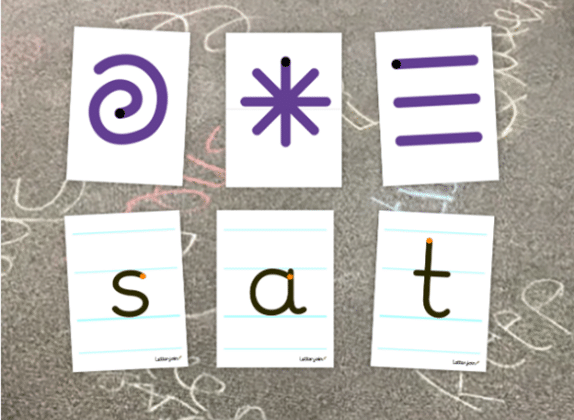
- begin forming lower case letters in the correct direction, starting and finishing in the right place
- form capital letters
- form digits 0-9
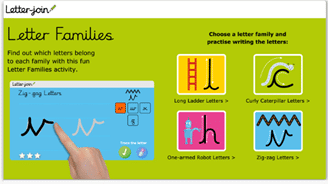
- understand which letters belong to which handwriting families.
**Chris can we attach pictures to these in the layout on website?**
Implementation
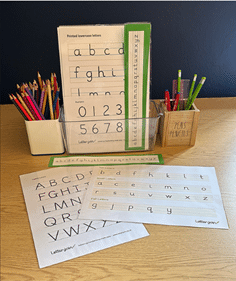
At Tibshelf Infant and Nursery School we know that handwriting needs frequent and discrete, direct teaching. We do this by following the ‘Letter-Join’ handwriting scheme.
Letterjoin’s handwriting scheme provides a structured teaching programme which supports the DfE’s 2025 Writing Framework and new UK curriculum review.
The Writing Framework (July 2025) emphasises the importance of progressive development and handwriting as a key transcription skills for fluent and legible writing.
Letter-join’s handwriting scheme support these aims by;
- Delivering ready to write routines – fun activities to support fine and gross motor skills development, and correct sitting position and pencil grip for handwriting.
- Providing opportunities for children to learn un-joined letters to establish correct letter formation.
- Ensuring consistency through a whole school approach from Reception to beyond Key Stage 1 with Townend Junior School continuing to use the same scheme.
- Offering a blend of traditional and digital resources – animations, animations, worksheets, dictation exercise, online games and resources to support regular handwriting practice.
- Supporting inclusive teaching with adaptable resources – ideal for left handed learning, children with dyslexia and the Letter-join Handwriting recovery programme for pupils who find handwriting challenging.
Nursery
In Nursery, children are supported to develop their pre-writing skills through gross and fine motor activities as part of their Physical Development learning opportunities. Children are able to explore making marks with a range of implements on both a large- and small-scale setting. The nursery learning environment both inside and outside provides access to a range of activities designed to support these pre-writing skills.
Reception
Reception children experience a daily 10minute handwriting session where children are supported to continue developing their gross and fine motor skills and confidence. They are taught arms experiences, how to hold a pencil using a comfortable grip and how to sit at a table. We value and understand the stages of pre-writing and support this by teaching pre-writing patterns before beginning to form any letters. During this stage, children will learn the vocabulary associated with handwriting and letter-shapes and learn how to do ‘air writing’ and other actions where patterns and letter shapes can be practised on a large scale. Children will be encouraged to make marks on paper using a wide variety of mark making materials both in and out of the classroom. Adults will ensure the size of the writing implement is not too large for the children’s hands to allow then to hold it easily. Adults in Reception and Nursery will spend time ensuring children do not pick up bad habits in the formation of letters.
As lessons begin to introduce forming letters in their families, children will be given a handwriting book where adults can use highlighters to directly teach children the correct start and end points, direction and size needed. Children will use this scaffold as a starting point for forming their own letters. Adults will deploy more scaffolding as needed for individuals.
As well as the direct teaching of handwriting daily, children will have the opportunity to;
- see adults forming letters correctly following the agreed handwriting font
- have access to a wide range of exciting and age and stage appropriate mark making implements – linked closely to our work on developing intended learning during Continuous Provision
- have their mark making/writing values, celebrated and displayed
- resources to support left-handed children or those that need tripod grippers
- children will be expected to transfer their taught handwriting skills into all other areas of the curriculum
- opportunities to strengthen their fine motor skills through activities such as cutting threading, sewing and moulding playdough.
Year 1
Children in Year 1 will continue to 10 minute daily handwriting lessons including how to write capital letters, numbers, punctuation, maths symbols and other symbols.
Year 2
In Year 2 children will move to three handwriting lessons a week for 20mins to build writing stamina. They will then be introduced to pre-cursive patterns and cursive letters and words, sequencing sentences, dictation exercises and the writing of high frequency words.
Home Links
Children are also able to log on to our Letterjoin scheme to practice a range of writing activities online using tablets or other touch screen devices.
Impact
At Tibshelf Infant and Nursery School, we believe that devoting time and patience to the teaching and learning of letter formation in the early years of school will ensure children have the skills to be capable lifelong learners.
We will know we are successful because children will be able to; produce legible writing that is produced comfortably, at speed and will little conscious effort allows children to attend to the higher level aspects of writing composition and content. We know that children with fast and legible handwriting are less likely to miss out on learning opportunities and under-achieve academically in the next stage of their education.
What is Phonics/Little Wandle?
At Tibshelf Infant and Nursery School we use Little Wandle phonics programme.
Little Wandle is a programme we follow to support the teaching of:
- the sounds (phoneme) that letters (graphemes) can make
- putting these sounds together (blending) to read
Pre-phonics Teaching
Before Reception children begin their formal phonics lessons, our Nursery children are supported to learn lots of songs and nursery rhymes to support their oracy levels. Here is the link to some familiar nursery rhymes that will be shared with our children.
For parents | Letters and Sounds
How do we teach phonics?
To help parents understand how we teach reading in school, parents are invited to attend a ‘Developing Early Reading’ workshop. During this meeting parents are informed about how phonics is taught in school. You can find a copy of this presentation here.
**Insert linked to Reception Reading Powerpoint**
There is a specific order in which the letter sounds are taught. Here is the order in which children will be introduced to each sounds.
Reception Autumn 1 Sounds
Reception-grapheme-information-sheet-Autumn-1 (3).pdf
Reception Autumn 2 Sounds
Reception-grapheme-information-sheet-Autumn-2.pdf
Reception Spring 1 Sounds
How-to-say-Phase-3-sounds-August-2022-.pdf
Year 1 sounds
How-to-say-the-Phase-5-sounds-September-2022 (3).pdf
Further video’s on pronouncing the sounds correctly can be found on the Little Wandle website.
For parents | Letters and Sounds
How does phonics link to reading?
The reading books children take home are closely matched to their developing phonic knowledge. They are designed to support them in practising and consolidating the learning they have done at school. They also enable the children to experience the pleasure and pride of reading their own books.
All the books in Little Wandle have been finely levelled to ensure children can read books at exactly the right level for them. Children should be able to read their book fluently and independently.
Please see the video below for more information on supporting your child with reading at home.
Speaking and Listening
Intent
At Tibshelf Infant and Nursery we recognise the value of Speaking and Listening skills being an important part of a child’s development across the whole curriculum – cognitively, socially and linguistically. We know that being able to use strong speaking and listening skills underpins the development of reading and writing. We understand that our children begin our school with a wide range of experiences in their language development from birth. Our aim is to ensure all children, regardless of their starting points, experience a language rich environment of high-quality interactions and conversations with knowledgeable adults throughout their entire day in school.
At Tibshelf Infant and Nursery School, we want our children to:
- develop a wide range of vocabulary
- use spoken language to learn, to discuss and explain clearly their understanding and ideas.
Implement
At Tibshelf Infant and Nursery School children experience high quality language interactions with skilled adults across the entire school community throughout the entire day. The adults in school understand the critical link between the importance of talk in developing young children’s vocabulary and language which in turn will help them to thrive in all other areas.
During their day in school our school will experience:
- being greeted into school and encouraged to acknowledge and reply
- adults who will listen carefully with patience to help children feel valued in their spoken language
- adults modelling good listening skills
- adults modelling non-verbal interactions
- adults using Makaton signs to support pre-verbal and SEND children
- adults re-modelling correct pronunciation
- adults thinking out loud and modelling their own thought processes
- adults asking open and closed questions
- adults taking the time to explain why things happen
- daily story time
- new vocabulary introduced and explained in all areas of the curriculum
- opportunities to retell and make up new stories using a range of media such as; puppets, stories, songs, poems, nursery rhymes, small world and block play, role play and other areas within their play.
Children are not formally assessed for their speaking and listening skills. Adults use their judgement whilst observing and engaging with children to make judgements on identifying any children who are working below their age-related expectations. Any child who needs extra support is offered intervention programmes such as Intensive Interactions or Every Child A Talker.
Impact
We will know our impact because children will be able to;
- know when to listen
- know how to listen
- articulate what they know and understand across all areas of the curriculum in well-formed sentences
- use a wide range of vocabulary; including subject specific vocabulary that has been taught
- read fluently with excellent levels of comprehension